Forest Queen
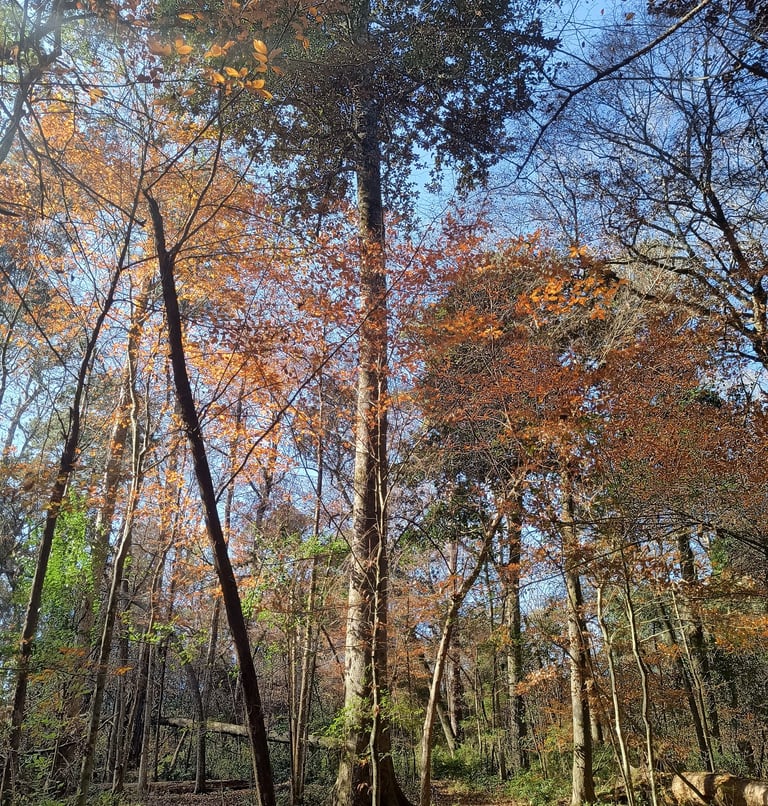
Meet Arabella, the queen of this forest. There are several immense trees located in the park, sweetgums, pines and oaks, but among them all stands one tree that is distinctly the queen of the park. She is a magnolia grandiflora or Southern Magnolia. This species of tree is an ancient one. Dating back 95 million years to a time where plants evolved to be pollinated by beetles instead of bees and dinosaurs wandered the landscape. This evergreen dominates any space it grows as its dense shade and shallow roots allow few plants to survive long under their shadow.
Arabella is over 11 feet in circumference and stands 135 feet tall. This height is hard to picture but the tallest building in Thomasville, the five-story Business Exchange Building, stands only 85 feet high. The nearby Water Tower on Jefferson Street downtown is 142 feet high making it an almost perfect representation of the height and canopy of Arabella.
We were fortunate to have two individuals from the nearby research station, Tall Timbers, visit the park recently. Below is an excerpt from their report taken from a boring of Arabella,
"Magnolia (Magnolia grandiflora) NP2: partial core, stopped at rot, core with 172 rings. We estimate this tree to be 250 years old or more."
What to Look For
1) Buttress Roots. Shallow-rooted trees like Magnolias use what are called buttress roots to provide stability. These are the folds you see in tree near its base.
2) Shallow roots. Spread out for many feet around the base of the tree you will see part of her roots peeking through the soil. This wide network helps her withstand storm winds and prevent competition from other plants for vital nutrients.
3) Bowed Trees. Trees that have begun to grow in her shade are often bent away from her canopy as they reach for sunlight. Being an evergreen with a dense canopy, very little sunlight reaches the area beneath her crown.
Contact
Reach out to support our forest efforts
Phone
fallingleafcollective@gmail.com
850-728-4467
© 2025. All rights reserved.